Strapping & Bracing
Strapping & Bracing
Strapping (taping) and bracing are practical ways to support a child’s foot or ankle when pain, instability, or injury is limiting movement. These supports are typically used short-to-medium term either as protection while healing, or as a “bridge” while longer-term solutions (strengthening, footwear changes, orthotics) take effect.
If your child has ankle rolling, pain during sport, or is returning after injury, ankle brace Hamilton support can provide immediate stability and confidence.
Need support for a sprain, heel pain, or unstable ankles?
Prefer local care? Book a paediatric podiatrist in Hamilton.
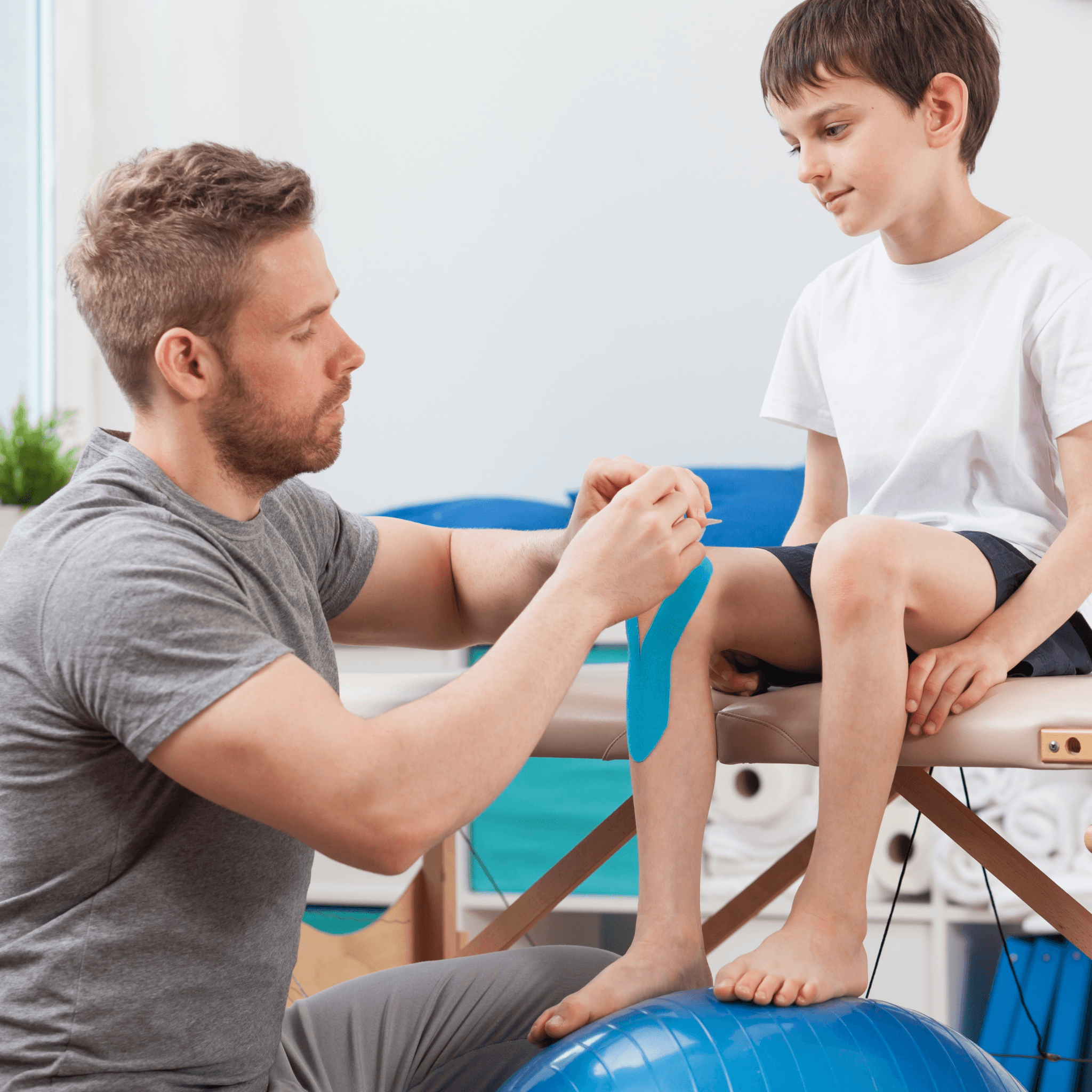
Strapping vs Bracing (What’s the Difference?)
Strapping (Taping)
Tape is applied to support a specific structure (arch, heel, ankle) and can:
reduce pain quickly
improve mechanics temporarily
act as a “trial” to see if support helps before choosing orthotics
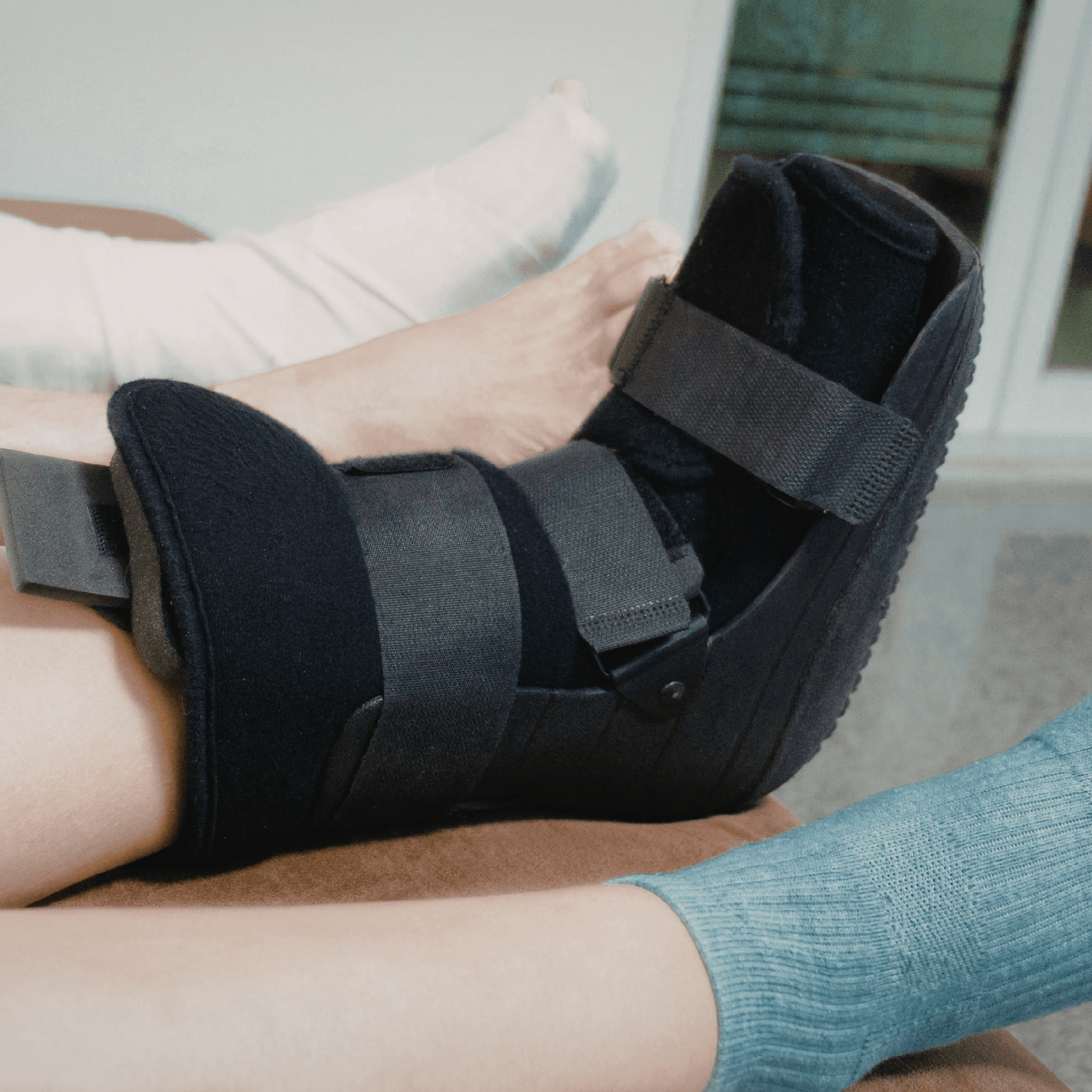
Bracing
Braces are removable supports (ankle braces, sleeves, splints) used to:
protect healing tissues
reduce re-injury risk during sport
improve stability for hypermobile ankles
assist gait retraining in selected cases
A well-chosen ankle brace Hamilton option should feel secure—not restrictive—and match the child’s activity level.
When Strapping or Bracing Is Helpful
Ankle Sprains and Acute Injuries
Bracing or taping can reduce painful movement, support ligaments while they heal, and prevent repeat rolling in the early phase.
Painful Flat Feet / Arch Strain
Low-Dye taping can provide temporary arch support and reduce strain during activity useful for flare-ups or as a trial before orthotics.
Sever’s Heel Pain
Selected strapping methods or supportive devices can reduce load and pulling stress during sport periods, alongside stretching and load management.
Toe-Walking Support (Selected Cases)
Night splints or structured supports may be used when stretching alone isn’t enough (taping alone is usually not strong enough for true toe walking correction).
Hypermobility / Recurrent Ankle Rolling
Bracing during high-risk activity can reduce sprain frequency and improve confidence.
If your child fits any of these categories, ankle brace Hamilton fitting and a clear plan can reduce pain while keeping kids active safely.
What Children and Parents Usually Notice (Benefits)
Faster confidence: kids often move better immediately with support
Less pain during activity: especially with arch or heel loading
Protected healing: reduced risk of “re-spraining” too early
Better participation: kids can stay involved in school sport (with guidance)
Better decision-making: taping response can indicate whether longer-term support is likely to help
Choosing the right ankle brace Hamilton support is often about allowing safe movement—rather than “locking things down.”
Want immediate support while you work on the long-term fix?
How Foot Foundation Applies Strapping
When taping is appropriate, we:
check skin sensitivity and use under-wrap/hypoallergenic tape if needed
apply the right technique for the goal (arch support, heel offload, ankle stability)
confirm circulation and comfort (wiggle toes, check pressure)
have your child stand and walk to see the effect immediately
If taping gives strong relief, we use that information to guide next steps (footwear, orthotics, strengthening).
This approach ensures ankle brace Hamilton or strapping choices are based on real response not guesswork.

How We Choose and Fit Braces
Braces are not one-size-fits-all. We select based on:
injury type and severity
sport demands (running, cutting, jumping)
stability needs (mild support vs stronger control)
comfort, shoe fit, and age appropriateness
We fit the brace, check movement, and make sure it sits correctly inside footwear when required. A properly fitted ankle brace Hamilton solution should feel supportive without causing numbness, rubbing, or toe colour change.
Need help choosing the right brace (not just buying random online)?
You can also book a paediatric podiatrist in Hamilton for a full stability + gait review.
Home Instructions
(What Parents Need to Know)
Tape care
how long it should stay on
how to remove it gently
what skin irritation signs to watch for
when not to reapply without guidance
Brace schedule
when to wear it (sport only vs daily use)
sock layer and comfort tips
how tight is “right”
when to return if it feels worse
A clear plan matters: ankle brace Hamilton use is most effective when it’s timed to risk periods (sport, uneven terrain, early return-to-play).

Follow-Up and Weaning
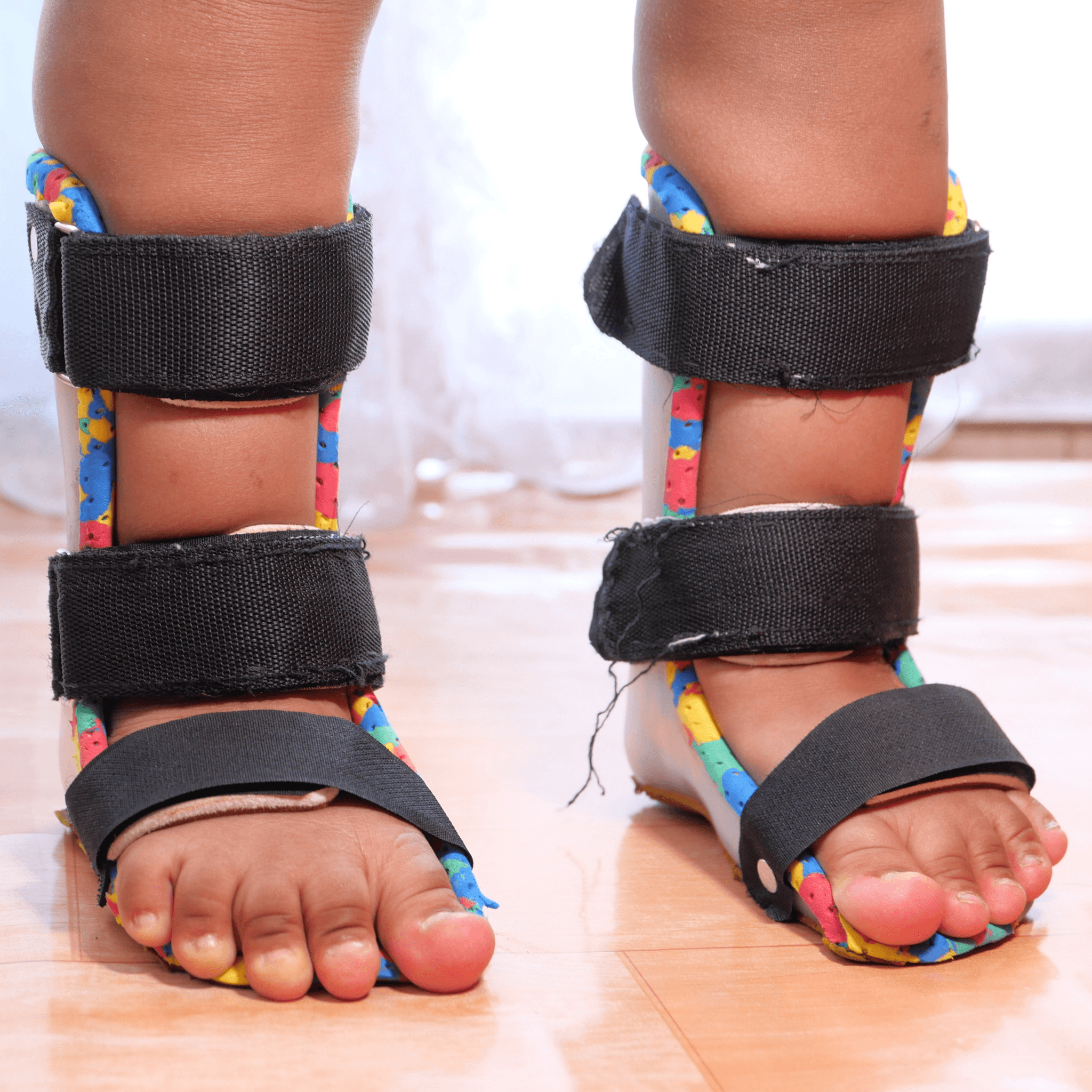
We don’t want kids stuck in braces forever. Our goal is:
use the least restrictive support for the right period
progress rehab/strengthening alongside support
reassess stability and pain
taper support when safe (to avoid reliance)
We’ll check whether your child can return to activity without pain and with good control before discontinuing.
This is why ankle brace Hamilton isn’t just a product it’s part of a plan.
Want to prevent repeat sprains this season?
You can also book a paediatric podiatrist in Hamilton.
FAQs
Will a brace make my child “weak”?
Not when used correctly. We pair bracing with strengthening and weaning so it protects without creating dependence.
Is taping better than a brace?
It depends. Tape is great short-term and for targeted support. Braces are reusable and often more consistent for sport.
Can strapping help decide if orthotics are needed?
Yes, if arch-support taping reduces symptoms, longer-term support may help.
If you’re unsure, a ankle brace Hamilton consult can clarify whether taping, bracing, exercises, or orthotics are the best next step.

Book in Hamilton
Strapping and bracing can make a meaningful difference quickly especially for sprains, instability, and pain flare-ups while your child builds strength and returns to full activity safely.
Book ankle brace Hamilton support with Foot Foundation for child-friendly fitting, safe guidance, and a plan that avoids unnecessary restriction.
Need local support? Book a paediatric podiatrist in Hamilton.